
Views: 0 Author: Site Editor Publish Time: 2026-01-26 Origin: Site


A quiet line can still be unstable. One loose joint can grow into sag, sway, or a sudden trip. High-quality Pole Line Hardware helps keep overhead power lines steady in wind, heat, and daily vibration.
In this article, you’ll learn what “stability” really means and which hardware details drive it. We’ll cover load control, corrosion resistance, vibration risks, and simple buyer checks you can use before ordering.
Mechanical stability means the conductor stays near its planned corridor and height. Sag stays predictable through temperature swings, load changes, and reconductoring work. Sway stays limited near crossings, angles, and crowded attachment zones on shared poles. Good Pole Line Hardware reduces slip at clamps, bands, and pole interfaces under cycling load. It spreads force across curved washers, formed brackets, and the pole contact surface. It also helps fasteners keep preload during vibration, shock loading, and thermal movement. When joints stay tight, alignment holds longer and crew adjustments drop over time. That stability protects structures and reduces unplanned maintenance visits after storms.
Stability goal | What crews observe | Pole Line Hardware role |
Controlled sag | Clearance stays steady in warm weather | Dead-ends, tension fittings, clamp grip |
Limited sway | Less swing in gusts and storms | Clamp security, vibration control parts |
Stable structure | Poles stay plumb after events | Guying parts, bands, crossarm interfaces |
Predictable upkeep | Fewer repeat callouts at one site | Corrosion control, consistent dimensions |
Electrical stability means energized parts keep safe distance during movement and weather. Insulation must stay reliable under rain, dust, salt deposition, and industrial pollution. Swinging conductors can reduce phase spacing during gusty conditions and sudden wind shifts. They can also approach grounded brackets, bolts, and pole bands as geometry drifts. Loose joints can raise resistance and create hot connections under peak demand periods. Heat can lead to arcing, surface tracking, and nuisance trips on sensitive feeders. High-quality Pole Line Hardware helps keep insulators seated, aligned, and correctly oriented. It also avoids burrs and sharp edges near polymer surfaces and protective coverings.
Note: Many stability failures begin as small fit errors at joints.
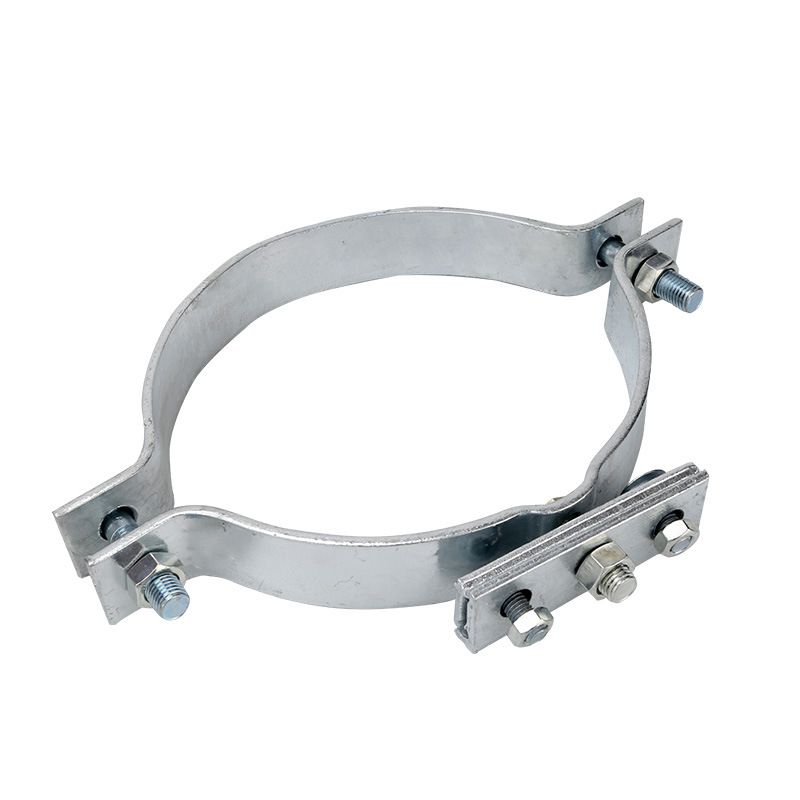
Loads travel through bands, washers, bolts, brackets, and the pole face together. Small contact areas create stress spikes at edges and corners during cyclic loading. Those spikes can crush wood fibers and let brackets rock during temperature changes. Curved washers and formed brackets spread pressure across a wider bearing surface. Better load spread keeps bolt preload more stable over time and reduces joint rotation. It also reduces crossarm twist and band creep during storms and equipment upgrades. Stable load paths help crews hit consistent torque and reduce field rework risk. When the load path stays smooth, the line stays aligned longer across seasons.
Tension hardware sets where the conductor wants to sit on the structure and span. If a dead-end slips, sag increases across the next spans and clearance drops quickly. If a clamp grips unevenly, creep can appear months after commissioning and inspection. High-quality Pole Line Hardware uses consistent grip geometry and stable base materials. It holds rated loads without permanent deformation, sharp bite marks, or uneven seating. That helps keep tension closer to target through heat, cold, and daily load cycling. Buyers should match clamp size, conductor type, and load class early in the RFQ. Crews should follow seating steps and torque targets to keep position predictable.
Corrosion changes thread friction and bearing faces over years of outdoor exposure. It also removes section thickness in salt air, high humidity, and industrial atmospheres. Both effects reduce preload and invite loosening under vibration and thermal movement. High-quality Pole Line Hardware uses proven coatings and suitable metals for each zone. Hot-dip galvanized steel fits many inland routes and standard distribution duty cycles. Coastal corridors may justify 304 stainless for selected clamps, bands, or fasteners. Clear coating specs reduce inspection disputes and help protect long-term joint stability. Consistent corrosion control also improves lifecycle cost and reduces emergency callouts.
Tip: Include coating thickness, test method, and sampling in every RFQ.
Wind can drive small, fast vibration on long spans during normal operation. Ice can trigger wider galloping motion during storms and rapid temperature shifts. Both modes stress clamps and attachments through repeated cycles that drive fatigue. Micro-slip can start fretting and speed crack growth at contact edges and seats. High-quality Pole Line Hardware supports stable seating and smooth contact surfaces. It also pairs better with dampers and spacers when engineering calls for mitigation. Vibration control needs an installation plan, not only a parts list for purchasing. Correct placement and correct torque help reduce fatigue damage over service life.
Clearance control depends on both fastening quality and mount stiffness at the pole. If bolts loosen, insulators can rotate and shift conductor position over time. If brackets bend, phase spacing shrinks and flashover risk rises during gusts. High-quality Pole Line Hardware controls thread form, hole spacing, and bracket strength. It also uses clean edges and reliable bearing faces to improve torque repeatability. Smooth edges reduce damage risk to polymer sheds and protective coverings in the field. Aligned mounts help keep phase spacing safer during storms and heavy loading periods. Crews also benefit from safer handling and fewer stripped threads during installation.
Clamps and fittings control conductor position at the most sensitive locations. Suspension clamps manage weight and swing at mid-span supports and tangent poles. Dead-end clamps resist axial load at terminations, corners, and high-tension points. If grip changes over time, sag and sway behavior changes and stability drops. High-quality Pole Line Hardware keeps clamp geometry consistent across lots and suppliers. It also uses stable materials and predictable seating surfaces to support repeatable torque. Ask suppliers for load ratings, fit limits, and proof plans where loads are critical. Traceable batches help buyers isolate issues quickly and avoid repeated field failures.
Pole stability supports line stability, especially under unbalanced wind and equipment loads. Guy clamps and stay rods counter side forces and help poles stay plumb after storms. Anchors and rods keep structures from drifting and changing clearance over long periods. Interfaces also matter, since bands, brackets, and washers shape how loads enter the pole. Low-quality interfaces can slip, rotate, or crush surfaces and shift geometry over time. High-quality Pole Line Hardware controls dimensions, curvature fit, and surface condition. It also supports standardization across builds, which reduces mistakes and spare-part variety. Buyers should review interfaces early, since they often cause the hidden install delays.
Note: Most instability complaints start at interfaces, not at conductors.
Material choice decides how long Pole Line Hardware stays stable in the field. Instead of picking by habit, we can match the metal to the load path and the exposure zone. Here are practical rules buyers can apply fast.
· Low-carbon steel fits many brackets and bands inland. It forms well and holds shape under normal duty.
· Forged steel suits high-load clamps and critical connection points. It handles stress better during shocks and heavy tension.
· 304 stainless steel fits coastal and high-humidity corridors. It reduces rust risk where zinc loss accelerates.
· Mixed fleets need clear rules by route segment. It prevents late-stage swaps and inventory confusion.These choices trade upfront cost against corrosion risk and access limits. If crews cannot reach the site often, longer-life materials pay back faster. High-quality Pole Line Hardware keeps stability high by matching material to duty, not legacy lists.
Coatings protect surfaces and also shape torque behavior over time. Stable coatings support preload retention and reduce rust streaks near edges. A simple control plan can prevent most coating surprises.
1. Specify the coating system and the inspection method in the RFQ.
2. Confirm thread, edge, and contact-face treatment before production starts.
3. Reduce mixed-metal contact in wet zones using consistent metals or isolators.
4. Ask suppliers how they handle zinc buildup and coverage on threads and corners.
Mixed metals can speed local attack under moisture films. Stainless fasteners can accelerate zinc loss on nearby galvanized steel in some assemblies. Aluminum contact can also raise galvanic risk near salt exposure. A clear pairing strategy keeps protection consistent and helps Pole Line Hardware stay tight longer.
Rebuilds often push older structures harder than before. Conductors get larger, tension rises, and clearance margins tighten in hot weather. Added gear increases wind area and boosts joint stress during storms. High-quality Pole Line Hardware reduces slip and slow drift after heavy loading events. It also cuts rework during tight outage windows, since parts fit and torque more predictably. Buyers usually see the fastest payoff at dead-ends, angles, and crowded attachment points. Those locations amplify small errors into visible sway and sag changes. Stronger, more consistent hardware stabilizes the whole span chain and reduces repeat callouts.
Joint-use poles carry power, telecom, and lighting hardware in limited space. Crowding raises clearance risk and forces tighter bolt placement for crews. Each added attachment increases wind load and vibration exposure on the structure. High-quality Pole Line Hardware keeps geometry stable using accurate hole patterns and stiff brackets. Offset bands can help manage spacing and load direction on shared poles. Better fit reduces field drilling and limits pole damage during retrofits. Public corridors also punish instability because disruptions are highly visible. Stable hardware lowers loosening risk, improves safety, and reduces emergency work near traffic and pedestrians.
Start by defining stability targets for each route segment and structure class. Write load cases for tension, wind, and ice where they apply to the corridor. Define exposure zones, such as coastal, industrial, or high humidity microclimates. Set service life goals and access limits for maintenance crews and contractor plans. Then map needs to Pole Line Hardware sizes, ratings, and interface requirements. This prevents under-spec in harsh zones and overbuying inland across the program. Include pole diameter range and hole patterns in every requirement brief. Clear inputs make supplier quotes comparable and reduce approval cycle time.
High-quality parts should arrive with evidence and practical control plans. Ask for material certificates tied to lots for critical clamps and fasteners. Request dimensional reports on bands, brackets, curvature fit, and custom holes. Request coating thickness checks on galvanized parts and threads as shipped. For load-critical items, request proof tests when they apply to the design. Traceability helps when issues appear across multiple depots and regions. Batch IDs speed corrective actions and protect crews from repeat failures. Pilot lots also prove fit, torque feel, and install speed on real poles.
Verification item | What it confirms | Stability value |
Dimensional report | Holes, curvature, thickness | Reduces misfit and joint slip |
Coating record | Standard and thickness checks | Slows corrosion-driven loosening |
Mechanical test report | Proof or tensile performance | Confirms capacity at critical points |
Traceability marking | Lot identity and batch control | Speeds fixes after field issues |
Tip: Use a pilot lot to confirm fit, torque, and install time on site.
Instability shows as repeatable symptoms crews can see and measure in the field. You may see increased sag at similar temperatures and loading on the same spans. You may see more swing near crossings, corners, and open fields during gusts. You may hear noise from hardware stacks during vibration and conductor motion. You may see hot spots near connections during peak demand and high current flow. Root causes often include poor fit, corrosion loss, vibration fatigue, or wrong torque. Start inspections at dead-ends, angles, and crowded attachment zones first. Look for slip marks, rust streaks, fretting debris, and uneven bearing surfaces.
Fixes should match the observed root cause, not assumptions or habit fixes. Replace misfit interfaces and correct curvature or hole patterns when needed. Upgrade coatings or use stainless in severe exposure zones and splash areas. Add dampers or spacers where vibration drives fretting and fatigue damage. Standardize fasteners and washers to improve torque repeatability across crews. After repairs, build a prevention plan for dead-ends and joint-use poles. Track replacements by batch or lot to support future root-cause work. Stable hardware programs reduce emergency work and improve reliability metrics.
High-quality Pole Line Hardware improves overhead line stability. It reduces sag, limits sway, and keeps clearances safer. It also holds torque longer, resists corrosion, and slows vibration fatigue, so outages and repeat callouts drop over time.
Hangzhou Wonder Hardware Manufacturing Co., Ltd. supplies Pole Line Hardware built for outdoor stress. They offer HDG, 304 stainless, and forged options, plus OEM and ODM support, helping buyers match loads, environments, and pole geometry for steadier lines.
A: Pole Line Hardware includes clamps, bands, bolts, and brackets that keep conductors and insulators stable on poles.
A: Pole Line Hardware holds torque better, resists corrosion, and reduces slip, so sag and sway stay more controlled.
A: Use Pole Line Hardware that matches conductor size and pole geometry, then install it using correct torque and fit checks.
A: Pole Line Hardware that lasts longer reduces rework, truck rolls, and outage repairs, even if unit price is higher.
A: Inspect Pole Line Hardware for poor fit, loose fasteners, coating loss, or vibration fatigue near clamps and bands.


