
Views: 0 Author: Site Editor Publish Time: 2026-02-12 Origin: Site


A small part can cause big problems. Is your network at risk?
Choosing the right Cable Clamp is not simple. Different cables need different support.
In this article, you will learn how to select the right clamp for fiber and communication cables.
Selecting the correct Cable Clamp begins with understanding the physical and structural characteristics of the cable itself. Fiber optic and communication cables differ significantly in geometry, strength-member configuration, and mechanical behavior under load. A clamp that performs well for one structure may be completely unsuitable for another. Before comparing clamp materials or load ratings, installers should first classify the cable type and confirm its structural design.
Cable construction directly determines which clamp structure is appropriate. The outer shape, load-bearing elements, and installation environment all influence whether a wedge-style, suspension, or cushioned clamp should be used.
Below is a structured comparison of common communication cable types and their typical clamping approaches:
Cable Type | Structural Characteristics | Typical Installation Scenario | Recommended Clamp Structure |
Flat FTTH Drop Cable | Flat profile, integrated strength members | Pole-to-building residential drops | Wedge-style drop clamp designed for flat geometry |
Round ADSS Cable | Circular cross-section, self-supporting | Long aerial spans between poles | Tension clamp (anchoring) or suspension clamp depending on location |
Figure-8 Cable | Round fiber section with external messenger wire | Utility pole lines with messenger support | Messenger-compatible anchoring clamp |
Indoor Communication Cable | Small diameter, flexible, non-load-bearing | Server rooms, trays, equipment racks | Cushioned or light-duty support clamp |
Instead of selecting a clamp by name alone, analyze how the cable behaves under mechanical stress. For example, flat FTTH drop cables distribute tension differently than round ADSS cables. A wedge-style clamp is often used for drop cables because it grips without crushing the flat profile, whereas ADSS cables typically require tension-rated anchoring clamps capable of handling longitudinal load across long spans.
Indoor communication cables, by contrast, are not designed to carry tensile load over distance. In these environments, the clamp’s role shifts from load-bearing to organization and strain relief. Cushioned or non-compressive support clamps are typically sufficient, provided they maintain routing stability without introducing bend-radius violations.
When evaluating cable type, consider the following checklist before selecting a Cable Clamp:
● Does the cable carry its own tensile load (e.g., ADSS)?
● Is there a messenger wire involved?
● Is the cross-section flat, circular, or hybrid?
● Will the cable be suspended, anchored, or simply routed?
Correctly answering these questions narrows clamp options significantly and prevents mismatched hardware selection.
After identifying the cable type, the next critical step is verifying the exact outer diameter (OD). This step is often underestimated, yet it directly determines holding strength and mechanical safety.
A Cable Clamp must operate within a defined diameter range. Nominal categories such as “drop cable clamp” or “ADSS clamp” are not sufficient without confirming dimensional compatibility.
Improper sizing creates two primary risks:
● Too loose: The cable may slip under tension, especially during wind loading or thermal expansion cycles. Over time, this can cause gradual sagging or termination stress.
● Too tight: Excessive compression can deform the cable jacket, transfer pressure to internal buffer tubes, and potentially affect fiber integrity.
To ensure accurate matching, installers should:
1. Measure the cable’s actual OD using calipers rather than relying solely on product labels.
2. Confirm the clamp’s specified clamping range (minimum and maximum diameter).
3. Verify that the clamp distributes pressure evenly rather than concentrating force at sharp edges.
Below is a simplified verification framework:
Verification Step | Why It Matters |
Measure actual OD | Manufacturing tolerances vary; printed specs may differ slightly from field measurement |
Check clamp diameter range | Ensures secure grip without over-compression |
Inspect internal clamp surface | Prevents jacket abrasion or pressure points |
Confirm load compatibility | Diameter fit alone does not guarantee mechanical suitability |
Precise OD verification prevents common installation errors that are not immediately visible but can lead to long-term reliability issues. Especially in aerial installations, even slight dimensional mismatches may compromise performance under cyclic loading conditions.
One of the most important decisions when selecting a Cable Clamp is identifying whether the installation point must anchor mechanical tension or simply support the cable’s weight. Although both tension and suspension clamps secure fiber optic cables, their structural roles are fundamentally different. Confusing the two can result in mechanical failure, excessive sag, or long-term fiber stress.
In aerial and pole-mounted communication systems, every support location performs a specific mechanical function. Some points terminate or redirect load, while others only carry vertical weight. Correctly categorizing the application ensures that the clamp chosen matches the actual force distribution acting on the cable.
A tension (anchoring) Cable Clamp is required whenever the installation point must resist longitudinal pulling force. These clamps are load-bearing components and are engineered to grip the cable securely without allowing slippage under sustained tension.
Tension clamps are typically used in the following scenarios:
● Securing cable ends at terminal poles or building entry points
● Supporting long aerial spans between two structural anchors
● Maintaining mechanical stability where directional changes occur
Unlike basic support hardware, anchoring clamps must meet defined mechanical strength requirements. The clamp body, gripping mechanism, and load rating must exceed the maximum expected tensile force, including environmental factors such as wind pressure and ice accumulation.
In practical terms, tension clamps must transfer pulling force to the cable’s strength members rather than compressing the fiber core. For example, wedge-style anchoring clamps distribute load progressively along the cable surface, preventing localized damage while maintaining high holding strength.
Because tension clamps function as structural anchoring components, they should always be selected with verified load capacity data rather than assumed compatibility. Their role is not merely to “hold” the cable, but to secure and maintain designed line tension across the entire span.
A suspension Cable Clamp is designed for a different mechanical purpose. Instead of resisting pulling force, it supports the vertical weight of the cable while allowing limited movement. Suspension clamps are commonly installed at intermediate poles or support points along an aerial route.
These clamps are used when:
● Supporting intermediate sections between anchor points
● Holding vertical load without terminating tension
● Allowing slight angular deviation along the cable path
Suspension clamps typically cradle the cable rather than tightly gripping it. This design minimizes stress concentration and accommodates small directional changes. In fiber optic systems, especially with ADSS cables, suspension clamps help maintain correct sag without introducing longitudinal strain.
It is critical to understand that suspension clamps are not substitutes for tension clamps. While they can hold weight, they are not engineered to withstand the pulling forces present at termination points. Installing a suspension clamp where anchoring strength is required may result in gradual slippage or sudden failure under extreme weather conditions.
The functional distinction can be clarified below:
Feature | Tension Clamp | Suspension Clamp |
Primary Function | Anchors and resists longitudinal pull | Supports vertical weight only |
Typical Location | Cable ends, angle poles, span terminations | Intermediate poles |
Load Type | Longitudinal tensile load | Vertical gravitational load |
Movement Allowance | Minimal | Limited angular movement allowed |
When selecting a clamp, the installer must first determine whether the point in question carries pulling force or simply supports cable weight. Only after defining this mechanical role should diameter, material, and environmental considerations be evaluated.
The installation environment significantly influences the type of Cable Clamp required for fiber optic and communication systems. A clamp that performs reliably in a climate-controlled indoor cabinet may deteriorate quickly when exposed to UV radiation, moisture, and temperature cycling outdoors. Environmental exposure directly affects material longevity, structural stability, and long-term mechanical performance. Therefore, clamp selection must align not only with cable structure and load demands, but also with where and how the cable is deployed.
Outdoor fiber deployments—such as aerial spans, pole-mounted drops, and façade routing—subject cable hardware to continuous environmental stress. In these conditions, clamp materials must maintain structural integrity despite prolonged exposure to sunlight, humidity, wind vibration, and seasonal temperature changes.
Ultraviolet radiation is one of the primary degradation factors in outdoor installations. Non-stabilized plastics can become brittle over time, leading to cracking or loss of clamping force. UV-stabilized polymer clamps are specifically formulated to resist photodegradation, helping maintain flexibility and tensile strength across years of exposure. This is particularly important in fiber-to-the-home (FTTH) deployments where clamps remain exposed on utility poles or building exteriors for extended service life.
In corrosive environments—such as coastal regions or industrial zones—metal components must resist oxidation and material fatigue. Galvanized steel offers protective coating against rust, while stainless steel provides superior resistance in high-salt or chemically aggressive atmospheres. Material choice should reflect environmental severity rather than initial cost considerations.
The table below outlines key material considerations for outdoor fiber applications:
Environmental Factor | Recommended Material Feature | Reason for Selection |
Direct sunlight exposure | UV-stabilized polymers | Prevents brittleness and surface cracking |
Coastal or high-salt areas | Stainless steel components | Resists corrosion and structural weakening |
General outdoor conditions | Galvanized steel or treated alloys | Provides balanced durability and cost efficiency |
Temperature fluctuations | Materials rated for thermal cycling | Reduces expansion-related stress and fatigue |
In aerial fiber deployments, environmental durability is directly linked to mechanical reliability. Even if a clamp meets load capacity requirements initially, material degradation over time may compromise holding strength. Therefore, when selecting a Cable Clamp for outdoor routing, environmental resilience must be evaluated alongside mechanical specifications.
Indoor communication environments present a different set of priorities. In server rooms, structured cabling systems, and equipment enclosures, cables are typically protected from UV radiation, moisture, and extreme temperature variations. As a result, material demands are generally lower compared to outdoor infrastructure.
However, indoor clamp selection still requires careful consideration. While heavy-duty corrosion resistance may not be necessary, proper cable organization and strain relief remain essential for maintaining network performance. Clamps used in these environments should support clean routing, prevent sagging within cabinets, and maintain bend radius compliance for fiber optic cables.
In structured cabling installations, lightweight nylon or cushioned clamps are often sufficient. These clamps provide secure retention without introducing excessive compression. In equipment enclosures, low-profile designs are preferred to optimize space utilization and airflow management.
When selecting indoor clamps, installers should evaluate:
● Compatibility with cable trays, rack systems, or panel mounting points
● Ability to provide stable support without over-tightening
● Ease of adjustment or repositioning during maintenance
Unlike outdoor systems where structural endurance dominates decision-making, indoor installations prioritize cable management efficiency and long-term accessibility. The clamp’s role shifts from environmental defense to controlled routing and strain mitigation.
After identifying cable type, clamp function (tension or suspension), and installation environment, the next critical factor is mechanical load capacity. A Cable Clamp is not just a positioning accessory in aerial fiber systems—it becomes part of the structural load path. Understanding how span length and environmental forces interact with cable weight ensures the clamp selected can safely withstand real-world conditions over time.
In communication networks, especially aerial fiber deployments, mechanical stress is dynamic rather than static. Wind, temperature fluctuation, and ice accumulation can significantly increase tension beyond the cable’s nominal weight. Therefore, evaluating load capacity is not optional; it is fundamental to preventing long-term performance degradation or sudden structural failure.
To select an appropriate Cable Clamp, installers must estimate the total mechanical force acting on the cable. This requires looking beyond simple cable weight and accounting for additional environmental loads.
Key variables include:
● Span distance: Longer spans increase tensile force at anchoring points. Even small increases in distance can dramatically raise mechanical stress due to sag and tension balancing.
● Cable weight per meter: Heavier cables generate higher baseline tension, especially in unsupported aerial runs.
● Wind load: Lateral wind pressure introduces dynamic movement and cyclic stress, increasing effective load on clamps.
● Environmental stress factors: Ice buildup, thermal expansion, and vibration can amplify tension beyond calculated static loads.
These variables interact rather than operate independently. For example, a moderate-weight cable installed across a long span in a windy region may experience greater stress than a heavier cable in a short, sheltered run.
When calculating expected stress, it is good practice to include a safety margin above the estimated maximum load. A clamp rated only for nominal cable weight may fail under peak environmental conditions. Manufacturers typically provide maximum load ratings; however, installers must interpret those ratings in the context of actual field conditions.
Load rating becomes especially important in aerial installations because the clamp functions as a structural anchor point. Unlike indoor routing—where clamps primarily organize and support cable weight—outdoor aerial clamps must actively resist mechanical forces over extended distances. In indoor environments, span lengths are shorter, loads are minimal, and environmental amplification factors are negligible. As a result, load capacity plays a secondary role indoors compared to outdoor systems.
In aerial deployments, by contrast, load capacity directly determines long-term reliability. A clamp with insufficient tensile strength may initially appear secure but can gradually slip, deform, or fail under cyclic loading. This can lead to cable sagging, misalignment, or stress concentration at termination points.
For this reason, evaluating span length and environmental stress is not merely a calculation exercise—it is a structural assessment. A properly selected Cable Clamp must withstand not only the cable’s static weight but also dynamic forces that develop throughout the service life of the communication line.
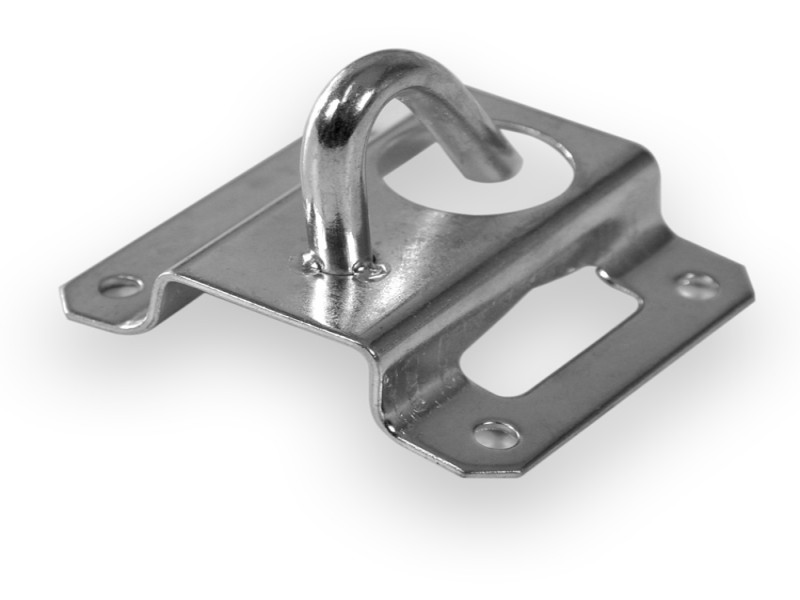
Even if the Cable Clamp matches the cable diameter and load requirements, improper mounting can undermine the entire installation. Clamp selection must account for how and where it will be fixed. Mounting hardware, substrate material, and structural configuration all influence whether the clamp will perform reliably over time. In fiber optic deployments—especially aerial networks—mechanical stability depends as much on mounting compatibility as on clamp strength.
Different infrastructure setups require different attachment strategies. A clamp designed for pole mounting may not be compatible with flat façade installations, and a wall-mounted clamp may lack the mechanical support needed for aerial spans.
In pole-based communication lines, clamps are often connected through brackets or stainless-steel banding systems. These systems distribute force around the pole surface and provide stable anchoring points for tension or suspension clamps. The clamp must include appropriate eyelets, hooks, or bracket interfaces to integrate with this hardware.
Wall-mounted installations, such as building façades, typically require anchor bolts or expansion fasteners. In these cases, clamp design must accommodate direct fastening to masonry or concrete without compromising alignment. Structural steel installations—common in industrial settings—may use bolt-through configurations or welded support brackets, requiring clamp components that align with pre-drilled steel frameworks.
The following table illustrates typical mounting scenarios and corresponding compatibility considerations:
Mounting Surface | Typical Hardware Used | Key Compatibility Requirement |
Utility pole | Pole brackets, stainless banding | Clamp eye or hook must align with bracket system |
Building façade | Wall anchors, expansion bolts | Direct bolt interface and load distribution support |
Structural steel | Through-bolts or welded brackets | Proper hole spacing and metal-to-metal stability |
Telecom cabinet frame | Panel screws or rail mounts | Compact design with minimal projection |
The critical takeaway is that clamp selection must consider mounting hardware early in the planning phase. Matching only the cable size is insufficient if the clamp cannot integrate securely with the intended support structure.
Installation method also affects clamp performance and project efficiency. In large-scale fiber deployments—such as FTTH rollouts—speed and repeatability are major concerns. Tool-free wedge-style clamps are commonly used in these scenarios because they allow fast cable insertion and automatic gripping without complex hardware adjustments.
However, rapid installation should not compromise structural reliability. In high-load or high-vibration environments, bolt-secured clamps may provide greater mechanical stability. These designs allow controlled tightening and stronger attachment, reducing the risk of gradual loosening over time.
The comparison below highlights the practical trade-offs:
Feature | Tool-Free Wedge Systems | Bolt-Secured Clamps |
Installation speed | High, minimal tools required | Slower, requires tightening hardware |
Mechanical adjustability | Limited after installation | Adjustable torque and repositioning |
Structural stability | Suitable for standard drop span | Preferred for high-load or vibration zones |
Maintenance flexibility | Quick replacement | More secure but may require tools |
The choice depends on deployment context. Residential drop installations often prioritize efficiency and standardized components. By contrast, industrial or high-tension environments benefit from hardware-secured solutions that prioritize durability over speed. Practical clamp selection balances these two factors based on structural demand and installation scale.
To simplify the decision-making process, apply the following structured evaluation sequence. This checklist consolidates the key technical considerations discussed throughout the guide and helps prevent common oversights during clamp selection.
1. Identify the cable type. Determine whether it is a flat FTTH drop cable, round ADSS cable, figure-8 design, or lightweight indoor communication cable. Cable construction directly influences clamp structure requirements.
2. Measure the exact outer diameter. Verify actual cable OD using field measurement tools rather than relying solely on nominal specifications. Ensure the clamp’s rated diameter range accommodates the measured value.
3. Define the mechanical role. Decide whether the clamp will anchor longitudinal tension or provide suspension support. This distinction determines load rating requirements.
4. Assess installation environment. Confirm whether the installation is indoor or outdoor and evaluate exposure to UV radiation, moisture, or corrosive conditions.
5. Estimate environmental stress. Consider wind load, span distance, and potential ice accumulation in aerial systems. Ensure clamp load capacity includes an appropriate safety margin.
6. Confirm mounting compatibility. Verify that the clamp integrates correctly with pole brackets, banding systems, wall anchors, or structural steel frameworks used in the project.
Following this ordered evaluation reduces the likelihood of mismatched components and improves long-term reliability in fiber optic and communication installations. Selecting a Cable Clamp is not a single-parameter decision; it requires coordinated consideration of cable structure, mechanical load, environment, and mounting method.
Choosing the right Cable Clamp starts with knowing the cable type and its role. You must check size, load, and environment. Mounting method also matters.
A smart choice reduces stress and errors. It supports long-term network stability.
Hangzhou Wonder Hardware Manufacturing Co., Ltd. offers durable, precision cable clamps. Their products ensure strength, safety, and reliable support.
A: Measure the exact outer diameter and match it to the Cable Clamp’s rated range to prevent slippage or compression damage.
A: Use a tension Cable Clamp for anchoring cable ends or long aerial spans where longitudinal pulling force must be resisted.
A: No. A suspension Cable Clamp supports vertical load only and is not designed to withstand tensile anchoring forces.
A: Yes. Outdoor Cable Clamp installations require UV and corrosion resistance, while indoor systems focus on routing stability.


