
Views: 0 Author: Site Editor Publish Time: 2026-02-11 Origin: Site


Fiber drop cables look light. But they face real stress. Wind and tension add risk. Poor anchoring causes damage. A proper Cable Clamp adds strength. It protects the last-mile link. In this article, you will learn how clamps secure and stabilize drop cables.
In FTTH deployments, the drop segment represents the most mechanically exposed portion of the network. Unlike feeder or backbone cables, drop cables are lighter, shorter, and directly subjected to environmental forces such as wind load, thermal expansion, and surface contact. A properly selected Cable Clamp serves as a structural transition point between the cable and its supporting structure, ensuring that mechanical stress does not transfer directly into the optical fibers. Its role is not simply to “hold” the cable, but to stabilize, distribute load, and preserve long-term signal integrity in real-world installations.
From a network reliability perspective, the Cable Clamp functions as a protective interface that supports both physical stability and optical performance. Without controlled anchoring, even small spans can introduce strain concentration, gradual sheath wear, or bending stress that affects attenuation levels over time.
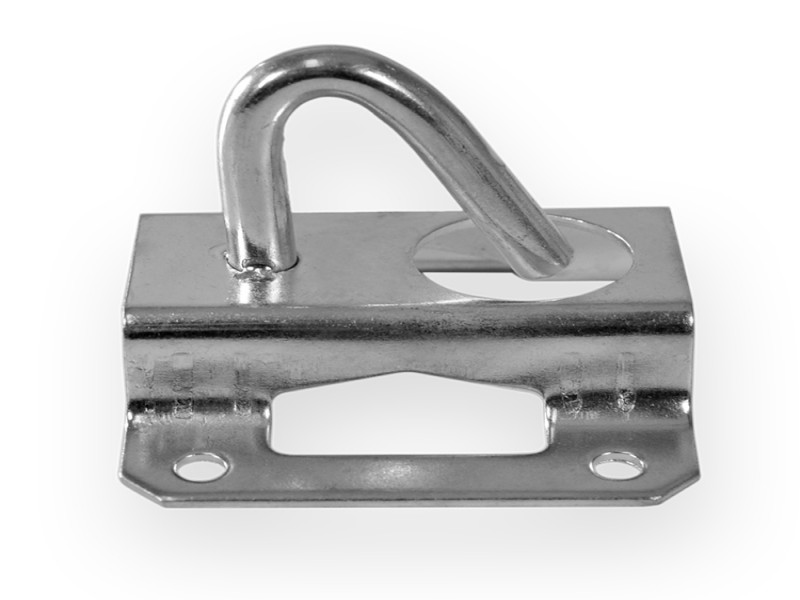
A Cable Clamp protects FTTH drop cables primarily through controlled strain relief. When a drop cable is suspended between a pole and a building façade, tensile forces generated by gravity and environmental movement must be absorbed at specific anchor points. The clamp acts as a load transfer mechanism, redirecting these forces from the fiber core to the outer sheath and then into the mounting hardware. This prevents stress from reaching the internal glass fibers, which are highly sensitive to elongation and micro-bending.
In practical installations, placement plays an equally critical role. The clamp is typically positioned near the end of the aerial span, just before the cable transitions to a wall-mounted or building entry section. This strategic positioning ensures that short spans remain stable and that the cable does not experience uncontrolled sag or torsional movement.
Key protective mechanisms of a Cable Clamp in drop cable applications include:
● Transferring tensile forces away from fragile fiber cores
● The clamp grips the outer jacket rather than compressing the fiber bundle directly. By distributing mechanical load across a broader contact area, it reduces localized stress and prevents fiber elongation under tension.Preventing micro-bending and signal degradation
● Excessive bending at anchor points can introduce micro-bends that increase optical attenuation. A correctly designed clamp maintains structural alignment and preserves minimum bend radius requirements during installation.Positioning between pole hardware and building façade to stabilize short spans
● In typical FTTH layouts, the clamp bridges the gap between overhead support and façade routing. This prevents the drop cable from oscillating or rubbing against mounting surfaces.Maintaining controlled load distribution without over-compression
Proper clamp tension ensures that the sheath is secured firmly while avoiding excessive pressure that could deform the cable profile.To better understand how these functions contribute to secure cable management, consider the following comparison:
Installation Factor | Without Proper Cable Clamp | With Proper Cable Clamp |
Tensile Load Control | Direct stress on fiber core | Load transferred to sheath and hardware |
Sag Management | Uncontrolled droop over short spans | Stabilized span with balanced tension |
Bend Radius Protection | Risk of sharp deflection at anchor point | Maintained structural alignment |
Long-Term Reliability | Gradual attenuation increase | Consistent optical performance |
Beyond mechanical protection, the clamp also contributes to installation efficiency and maintenance clarity. A stabilized drop cable remains easier to inspect, troubleshoot, and replace when necessary. Over time, this structured anchoring approach supports not only signal quality but also operational reliability across the access network.
In FTTH access networks, the performance of a drop cable is closely tied to how it is anchored at key structural points. While the cable itself carries the signal, the Cable Clamp ensures that mechanical stress is controlled at transitions between aerial spans, building surfaces, and entry locations. These application points are not interchangeable; each presents different load conditions, surface interactions, and long-term durability concerns. Understanding how clamps function in these three core environments helps ensure secure and reliable cable management throughout the last-mile connection.
Pole-mounted installations represent the most common use case for drop cable clamps in FTTH networks. At this stage, the clamp secures the aerial drop cable as it transitions from the distribution pole toward the customer premises. Because drop cables are typically lighter than feeder cables, the clamp must provide sufficient holding strength without over-tensioning the sheath.
In short to medium spans—often ranging from a few meters to several dozen meters—the clamp absorbs static load from cable weight as well as dynamic forces caused by wind movement. Proper positioning near the pole anchor bracket ensures that the tensile force is transferred into hardware rather than into the fiber core. This stabilizes the span and minimizes oscillation.
Key functional aspects in pole-mounted scenarios include:
● Securing aerial drop cables from utility pole to customer premises The clamp anchors the cable firmly at the pole, preventing slippage during environmental movement. By creating a defined termination point, it ensures consistent span geometry and protects the structural integrity of the drop segment.
● Supporting short to medium spans typical in FTTH access networks Unlike long-haul aerial cables, drop segments operate within shorter distances but are more exposed. A well-rated clamp balances tension and sag, maintaining alignment without imposing excessive stress.
● Coordinating with anchor brackets and pole hardware Cable clamps do not function independently; they integrate with pole-mounted brackets, hooks, or eye bolts. Correct coordination ensures that load distribution is directed into structural supports rather than into the cable itself.
To clarify how pole-mounted applications differ from other mounting environments, consider the following comparison:
Installation Aspect | Pole-Mounted Application |
Primary Load Type | Aerial tension and wind movement |
Hardware Interface | Anchor bracket, hook, or pole eye bolt |
Span Control | Short to medium aerial distance |
Risk if Improperly Installed | Excessive sag or oscillation |
Once the drop cable transitions from the pole toward the building façade, the mechanical requirements change. Wall-mounted clamp applications focus less on span tension and more on controlled routing along vertical or horizontal surfaces. The objective is to stabilize the cable while preventing abrasion and long-term sheath wear.
Exterior walls often present uneven textures—brick, concrete, or siding—that can gradually degrade cable jackets if the cable is allowed to move freely. Properly placed clamps hold the drop cable at measured intervals, maintaining a clean routing path and preserving the cable’s bend radius.
In façade routing, clamps contribute to:
● Stabilizing vertical and horizontal cable runs Clamps maintain consistent alignment along the building surface. This prevents twisting, swaying, or unintended curvature that may develop over time due to environmental factors.
● Preventing abrasion against rough building materials Without secure attachment, even minor wind movement can cause repetitive friction. By holding the cable slightly offset from sharp edges, the clamp reduces long-term surface wear.
● Maintaining organized and tension-balanced cable alignment Balanced placement ensures that the cable neither hangs loosely nor is pulled too tightly against the structure. This organized layout improves both aesthetics and serviceability.
Proper wall-mounted support also improves maintenance visibility. Technicians can trace routing paths clearly, and secure clamp spacing reduces the risk of accidental detachment during inspections or repairs.
The building entry point is one of the most mechanically sensitive locations in a drop cable installation. This is where the cable transitions from an exterior environment into interior routing or termination equipment. Without stabilization at this junction, concentrated stress can accumulate near drilled openings or conduit penetrations.
A clamp placed just before the entry point acts as a strain relief buffer. It anchors the cable externally, ensuring that any tension from the aerial span does not transfer directly into the indoor segment. This separation protects connectors, splices, and termination hardware inside the premises.
Critical stabilization functions at the entry point include:
● Anchoring the cable before indoor penetration The clamp establishes a mechanical break between outdoor tension forces and indoor routing. This prevents structural load from reaching delicate internal terminations.
● Reducing stress concentration at drilling or conduit entry points Entry holes and conduit edges can create localized bending stress. Proper anchoring maintains controlled cable geometry and prevents sharp deflection at the transition.
● Protecting long-term connection integrity at the handoff location By isolating mechanical forces outside the building, the clamp preserves signal stability and reduces the likelihood of long-term attenuation or connector fatigue.
Across pole mounting, wall routing, and building entry transitions, the consistent theme remains structural control. Each application point demands precise anchoring to manage tension, alignment, and environmental exposure. When applied correctly in these core locations, a Cable Clamp ensures that the drop cable remains secure, organized, and mechanically protected throughout its entire last-mile path.
Aerial drop segments are structurally different from façade or entry-point routing because they operate as suspended spans exposed to environmental loading. In FTTH deployments, these spans are typically short to medium in length, yet they are highly sensitive to improper tension control. A correctly installed Cable Clamp functions as the primary mechanical anchor that stabilizes the span, absorbs load, and maintains geometric consistency over time. Without controlled installation, even lightweight drop cables can experience sag imbalance, vibration fatigue, or bend-radius violations that compromise long-term reliability.
Effective aerial installation is therefore not simply about fastening the cable to a pole. It involves calculating load behavior, positioning the clamp correctly, and ensuring that the mechanical forces remain outside the fiber core.
In overhead FTTH configurations, tension and sag must be carefully balanced. Drop cables may appear light, but gravity acts continuously across the span, generating static load that accumulates at anchor points. If tension is insufficient, excessive sag develops; if tension is too high, the sheath may deform or internal fibers may experience strain.
Managing static load from cable weight across short spans When a drop cable is suspended between two support points, its own weight creates downward force along the entire span. The Cable Clamp absorbs this force at the termination point, transferring it into the mounting hardware rather than allowing stress to propagate into the fiber core. Proper installation ensures that the cable forms a controlled catenary curve rather than an uncontrolled droop. This balance preserves both mechanical stability and optical performance.
To illustrate the relationship between span length and mechanical behavior:
Span Characteristic | Mechanical Risk if Improperly Controlled | Role of the Cable Clamp |
Short span (low distance) | Uneven tension concentration | Stabilizes load distribution |
Medium span | Gradual sag accumulation | Maintains balanced anchoring |
Improper anchoring | Fiber strain at termination | Redirects stress to hardware |
Addressing wind-induced dynamic forces and vibration Unlike static weight, wind introduces dynamic movement. Even light gusts can cause oscillation in short aerial spans, especially in open residential areas. Repeated vibration can lead to gradual sheath wear or fatigue at anchor points. A properly selected clamp secures the cable firmly while allowing minimal controlled flexibility, reducing repetitive motion that may otherwise degrade performance over time.
Dynamic considerations include:
● Minimizing lateral movement during wind exposure
● Preventing cable twisting near the clamp interface
● Ensuring hardware rigidity at the support structure
Preventing excessive sag that may compromise structural stability Excess sag does more than affect appearance; it alters mechanical geometry. Sagging increases bending stress near anchor points and may lower the cable closer to pedestrian or vehicular zones. Correct clamp positioning and tension calibration ensure that the drop segment maintains safe clearance and stable alignment throughout seasonal temperature changes.
Excessive sag can result in:
● Increased strain concentration at termination points
● Greater exposure to environmental contact
● Long-term attenuation shifts due to micro-bending
Preserving minimum bend radius during overhead installation One of the most overlooked aspects of aerial clamp installation is bend radius preservation. Drop cables must not be sharply deflected as they transition from aerial span into wall routing or entry points. The clamp should align the cable gradually, avoiding abrupt directional changes that could introduce micro-bends. Maintaining proper curvature ensures that optical signal transmission remains stable and within design parameters.
From a practical standpoint, aerial clamp installation should always consider:
1. Span length and environmental exposure
2. Correct tension adjustment before final fastening
3. Alignment with pole hardware to avoid angular stress
4. Smooth transition from aerial section to façade routing
Selecting the right Cable Clamp for FTTH drop cable installations is not merely a purchasing decision—it is a structural engineering consideration. Because drop cables are lighter and more sensitive than feeder lines, clamp selection must balance holding strength, surface compatibility, and environmental endurance. A poorly matched clamp may either slip under tension or compress the sheath excessively, both of which can affect long-term network stability. Proper evaluation focuses on mechanical fit first, followed by environmental resilience.
In real-world FTTH deployments, clamp performance must align with span length, mounting hardware, and exposure conditions. The following criteria provide a structured approach to selection.
Mechanical compatibility begins with understanding the physical profile of the drop cable. FTTH drop cables are commonly available in flat and round configurations, each requiring a clamp design that distributes pressure evenly across the sheath. Using a clamp that does not conform to the cable profile can result in uneven load concentration and eventual deformation.
Matching clamp design to drop cable diameter and profile A clamp must align with the cable’s cross-sectional geometry. Flat drop cables require gripping surfaces that support wide-area contact, while round cables rely on uniform circumferential pressure. A mismatch may cause partial compression, which increases the risk of micro-bending or long-term sheath fatigue.
Evaluating rated tensile performance relative to span length Clamp load rating must correspond to the expected tension generated by the aerial span. Short residential spans require moderate holding strength, whereas slightly longer cross-street spans may generate higher tensile forces due to weight and wind exposure. Selecting a clamp below the required load threshold can result in slippage, while excessive rating without proper adjustment may cause over-tightening.
The following table summarizes key mechanical considerations:
Selection Factor | Why It Matters | Risk if Incorrect |
Cable Diameter/Profile | Ensures proper contact and load distribution | Sheath deformation or unstable grip |
Rated Tensile Strength | Matches expected span tension | Slippage or over-compression |
Grip Mechanism Type | Determines pressure uniformity | Uneven stress concentration |
Ensuring secure grip without sheath deformation A secure clamp should hold the cable firmly without visibly altering its outer jacket. Over-tightening can flatten or indent the sheath, potentially transmitting stress inward toward the fiber core. Correct installation torque and clamp geometry help maintain structural integrity while achieving stable anchoring.
In practical selection, installers should confirm:
● Compatibility between clamp groove design and cable profile
● Manufacturer-rated load capacity compared to projected span tension
● Even pressure distribution across the contact surface
Because most drop cable clamps operate in exposed environments, environmental durability is equally critical. Outdoor FTTH installations face constant exposure to sunlight, moisture, temperature changes, and airborne contaminants. Clamp materials must withstand these conditions without degrading or compromising grip strength.
UV resistance and corrosion protection Clamps used in exterior installations should resist ultraviolet degradation and corrosion. Stainless steel and coated metal components are commonly selected for their resistance to oxidation, especially in humid or coastal environments. Without proper material selection, surface rust or polymer brittleness may reduce holding capacity over time.
Temperature fluctuation effects on materials Seasonal expansion and contraction can influence both the clamp and the cable sheath. Materials with high thermal stability maintain consistent grip despite temperature swings. In regions with extreme cold or heat, selecting clamps with stable mechanical properties prevents loosening or stress variation at anchor points.
Long-term durability in exposed outdoor conditions Outdoor durability involves more than initial strength; it requires sustained performance under wind, rain, and continuous load. The clamp must maintain structural rigidity without becoming brittle, warped, or weakened. Consistent environmental performance ensures that tension balance and sag control remain stable across years of service.
Environmental selection criteria may include:
● Material corrosion resistance rating
● UV stability for polymer components
● Mechanical retention performance under temperature cycling
● Suitability for coastal, urban, or high-wind areas
Fiber optic drop cables need strong mechanical support. Without proper anchoring, tension and sag cause damage.
Correct Cable Clamp use improves strain relief and keeps spans balanced. It supports long service life.
From pole to entry point, stable installation matters. Hangzhou Wonder Hardware Manufacturing Co., Ltd. provides durable clamp solutions with reliable performance and dependable service support.
A: A Cable Clamp transfers tensile load from the drop cable to the mounting hardware, preventing fiber strain and maintaining stable span geometry.
A: Choose a Cable Clamp rated for the span length, cable diameter, and expected wind load to ensure proper tension and sag control.
A: Yes. A properly installed Cable Clamp reduces micro-bending and stress concentration, helping preserve optical performance over time.
A: Outdoor Cable Clamp designs use corrosion-resistant materials and UV-stable components to withstand environmental exposure.


